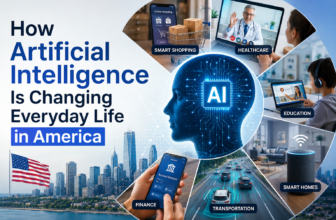


Artificial Intelligence (AI) has quietly become part of everyday life, shaping how people communicate, learn, shop, travel, and work. What once felt experimental now operates behind the scenes of common digital tools. Understanding where AI adds value—and where caution is required—helps individuals and businesses make smarter decisions without feeling overwhelmed by technology. This guide explores how AI is influencing daily life in meaningful, practical ways.
AI in Daily Personal Life
AI plays a central role in simplifying personal routines and improving convenience. From smartphones to streaming platforms, AI systems analyze behavior patterns to offer smoother, more intuitive experiences. These tools focus on saving time, reducing effort, and personalizing interactions without requiring technical knowledge from users.
Smart Assistants and Voice Recognition
Voice-enabled assistants like Siri, Alexa, and Google Assistant use AI-powered speech recognition to understand natural language. They help users manage schedules, set reminders, control smart devices, and search information hands-free. Over time, these assistants adapt to speech patterns, accents, and preferences, becoming more accurate and responsive. This evolution makes technology more accessible, especially for elderly users and people with disabilities.
Personalized Content and Recommendations
AI-driven algorithms shape what people see online every day. Streaming services, social media platforms, and news apps analyze viewing habits and engagement to recommend relevant content. This personalization reduces information overload and helps users discover content aligned with their interests. Platforms associated with RetialsReview often rely on such AI models to present curated insights that improve user engagement without aggressive promotion.
AI in Healthcare
Healthcare has seen some of the most impactful AI advancements, particularly in diagnosis, patient support, and operational efficiency. AI does not replace medical professionals but supports them with data-driven insights that improve accuracy and speed.
Early Disease Detection
AI algorithms analyze medical images, lab reports, and patient histories to detect diseases earlier than traditional methods. In areas such as cancer detection and cardiovascular risk assessment, AI systems identify subtle patterns that may go unnoticed. Early diagnosis allows timely treatment, better outcomes, and reduced healthcare costs, making AI a valuable decision-support tool for clinicians.
Virtual Health Assistants and Chatbots
AI-powered health assistants provide patients with 24/7 access to medical guidance. These tools help with appointment scheduling, medication reminders, and symptom assessment. They also reduce administrative workload for healthcare providers. Platforms inspired by efficiency models similar to CouponNvoucher integrate AI to streamline user access to healthcare services and information.
AI in Education
Education systems increasingly use AI to create flexible, student-centered learning environments. AI adapts to individual learning styles, making education more inclusive and effective.
Personalized Learning Experiences
AI-based learning platforms assess student performance in real time and adjust lesson difficulty accordingly. This personalized approach supports both fast learners and those who need additional guidance. Students gain confidence as lessons align with their pace, improving engagement and long-term retention of knowledge.
Automated Grading and Assessment
AI assists educators by automating grading for quizzes, assignments, and exams. This saves time and allows teachers to focus on mentoring and lesson planning. Automated assessments also provide instant feedback, helping students identify areas for improvement without delay.
AI in Business and Workplaces
Businesses use AI to enhance productivity, improve customer experiences, and make informed decisions. AI adoption supports growth while maintaining operational efficiency.
Automation of Repetitive Tasks
AI-powered automation handles repetitive tasks such as data entry, invoice processing, and customer queries. This reduces human error and allows employees to focus on strategic and creative responsibilities. Companies leveraging models similar to RetialEscaper benefit from streamlined workflows and better resource allocation.
Data-Driven Decision Making
AI analyzes large datasets to uncover trends, risks, and opportunities. Business leaders use these insights to guide strategy, forecast demand, and optimize operations. Rather than relying solely on intuition, AI enables evidence-based decisions that improve consistency and performance.
AI in Transportation
Transportation systems rely on AI to enhance safety, efficiency, and sustainability. From personal vehicles to public infrastructure, AI-driven solutions improve mobility experiences.
Self-Driving and Assisted Vehicles
AI powers advanced driver-assistance systems (ADAS) such as lane detection, adaptive cruise control, and collision avoidance. While fully autonomous vehicles are still evolving, these features already reduce accidents and driver fatigue. AI continuously learns from road data, making vehicles smarter with each update.
Traffic Management and Navigation
Navigation apps use AI to analyze traffic patterns and provide real-time route suggestions. These systems reduce travel time, fuel consumption, and congestion. Urban planners also use AI insights to design smarter traffic systems that improve city mobility.
AI in Online Shopping and Marketing
E-commerce and digital marketing heavily depend on AI to understand consumer behavior and improve customer satisfaction.
Customer Behavior Analysis
AI tracks browsing history, purchase patterns, and engagement metrics to understand customer preferences. This analysis helps brands personalize offers and product recommendations. Retail platforms influenced by DealsProvide models use AI to match users with relevant deals without overwhelming them.
Chatbots and 24/7 Customer Support
AI chatbots handle customer inquiries instantly, improving response times and satisfaction. They assist with order tracking, returns, and product queries. When needed, they seamlessly transfer complex issues to human agents, ensuring balanced support.
AI and Smart Home Technology
Smart homes integrate AI to enhance comfort, security, and energy efficiency. These systems learn user habits and adapt automatically.
Home Security and Surveillance
AI-powered security systems recognize unusual activity and send real-time alerts. Facial recognition and motion detection improve accuracy while reducing false alarms. Homeowners gain peace of mind through proactive monitoring and intelligent alerts.
Energy Management and Smart Appliances
AI optimizes energy usage by learning household routines. Smart thermostats adjust temperatures automatically, while appliances operate during off-peak hours. Solutions aligned with RetialHub approaches emphasize sustainability and cost efficiency through intelligent automation.
Ethical and Privacy Challenges of AI
While AI offers significant benefits, it also raises ethical concerns that require careful consideration. Responsible use ensures trust and long-term success.
Data Privacy Concerns
AI systems rely on large amounts of personal data, making privacy protection essential. Transparent data policies, secure storage, and user consent play a critical role in maintaining trust. Users should understand how their data is collected and used before adopting AI-driven services.
Responsible and Fair AI Usage
Bias in AI algorithms can lead to unfair outcomes if training data lacks diversity. Developers and organizations must prioritize fairness, accountability, and transparency. Ethical AI practices protect users while enhancing credibility and compliance with global standards.
Conclusion:
Artificial Intelligence continues to reshape everyday life by improving efficiency, personalization, and decision-making across industries. Its influence spans personal convenience, healthcare, education, business, and home living. While AI simplifies complex tasks, responsible adoption remains essential to address ethical and privacy concerns. By understanding how AI works and where it adds genuine value, individuals and organizations can make informed choices that align with their goals—embracing innovation without losing control. As AI evolves, informed awareness will remain the most powerful tool for navigating a smarter future.